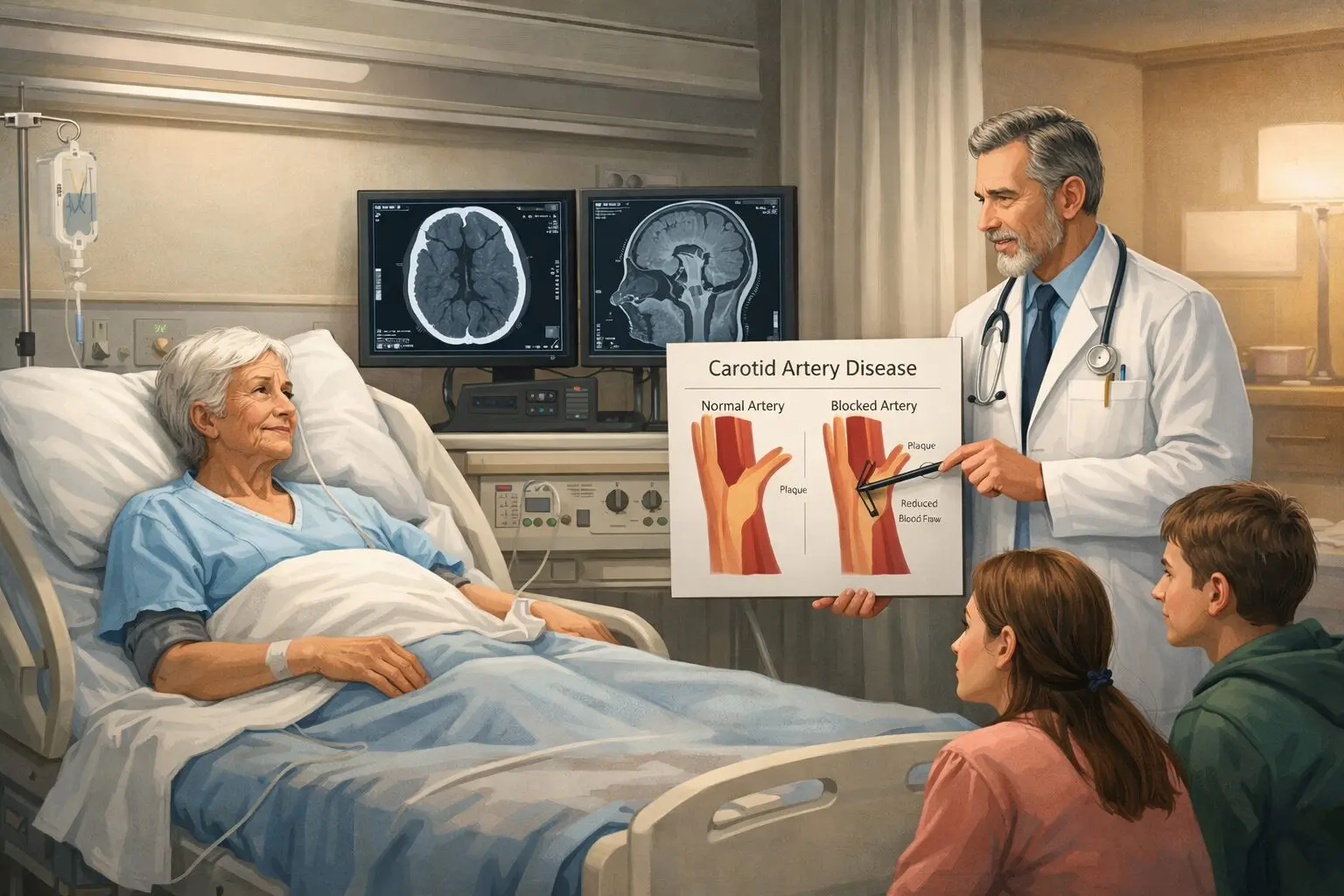
A few days ago, everything seemed fine. Then, out of nowhere, my mom started having trouble moving her right arm. Her speech became slurred, and her vision briefly shifted. Something clearly wasn’t right, so we called 911. The paramedics treated it as a possible stroke, because symptoms like these require immediate medical attention.
By the time she arrived at the hospital, her speech had improved, and the weakness in her arm had started to lessen. That might have seemed like a good sign, but the doctors still took it seriously. Quick improvement doesn’t mean the problem has passed.
Getting the Right Diagnosis
Table of Contents
The first test doctors ordered was a CT scan to check for bleeding or a large stroke. It didn’t show any major problems, which was a relief, but it didn’t fully rule out a stroke either. To get a clearer picture, they ordered an MRI.
The MRI confirmed it. She had experienced a small stroke. It affected a small area of her brain that controls movement, which explained the weakness in her arm. Fortunately, because the blood flow returned quickly, her brain began to heal, and her symptoms improved soon after.
This wasn’t a false alarm. It was a real stroke, just not a massive one.
Searching for the Cause
Once the stroke was confirmed, doctors needed to understand what had caused it. They performed imaging of the blood vessels in her neck and found that her right carotid artery was significantly narrowed.
The carotid arteries are essential. They carry blood from the heart to the brain. Over time, cholesterol and other materials can build up inside these arteries, forming plaque. Doctors believe that a small piece of plaque broke off from the narrowed artery, traveled to her brain, and temporarily blocked blood flow. That blockage caused the stroke.
The good news was that her left carotid artery looked normal. The issue seemed to be isolated to one side.
A Careful Hospital Stay
During her time in the hospital, my mom stayed alert and able to talk. Her right arm weakness improved each day, which gave everyone hope. Improvement is always a good sign because it shows that the brain is working to recover.
Doctors kept a close watch on her heart as well. Since strokes and heart issues often go hand in hand, they wanted to make sure nothing else was going on. No new heart attack was found, but some bloodwork showed mild stress on her kidneys. This likely came from the contrast dye used in scans and the strain of the illness. With fluids and rest, her kidney numbers started to improve.
She was prescribed medications to help prevent new clots, control blood pressure, and protect both her brain and heart. These treatments are typical after a stroke and are also used to prepare someone for surgery.
The Case for Surgery
Although her symptoms were improving, the cause of the stroke was still present. The narrowed carotid artery had to be addressed. That is why doctors recommended a procedure called carotid endarterectomy.
This surgery involves opening the artery and removing the built-up plaque. The goal is to restore better blood flow to the brain and reduce the risk of another stroke, which could be much more serious.
This wasn’t emergency surgery, but it was important to do soon. Before scheduling it, doctors ordered heart testing to make sure she could safely go through the procedure. She was cleared to proceed.
Getting Ready for Recovery
In the days leading up to surgery, the medical team managed her medications carefully. Blood thinners were adjusted to keep her safe from blood clots while also reducing the risk of bleeding during surgery. This balance is a routine part of care but requires close monitoring.
She also spoke with dietitians about making long-term changes to support her heart and brain health. They recommended cutting back on red and processed meats, and focusing more on poultry, fish, vegetables, fruits, and whole grains.
She remained stable and continued to feel better. The team expected that she would return home shortly after recovery from the procedure.
Where Things Stand Now
Her carotid surgery is now scheduled. Her symptoms have continued to improve, her condition is steady, and the surgery is being done to lower the risk of a second, possibly more severe stroke.
What started as a frightening emergency has turned into a structured treatment plan. We are thankful for the fast response, accurate tests, and clear communication from her care team.
What to Remember
She experienced a small stroke, but it was a real one.
The cause was narrowing in her right carotid artery due to plaque.
Her symptoms improved quickly, which was a good sign.
Surgery was recommended to prevent another stroke.
She is stable and expected to recover well.
Final Thoughts
This experience has reminded us how quickly life can change. It also showed how vital it is to respond fast, ask questions, and trust the care process. Everyone from the EMTs to the nurses and doctors played a role in helping her get better.
Stroke symptoms are not always dramatic. Sometimes they are subtle, like a weak arm or slurred words. But no matter how mild they seem, they must be taken seriously.
If someone you care about has these symptoms, call for help right away. Every second matters.
Recovery Update
I wanted to share an update on my mom’s condition following her surgery. The surgery itself went well, and the doctors were pleased with how everything went during the procedure. She is now awake and in recovery, where she is being closely monitored by the care team.
Right now, she is alert and responsive. She has some pain in her neck where the surgery was done, which is expected, and the nurses are managing that with medication. Her breathing is good, her oxygen levels are strong, and her vital signs are being watched carefully. The surgical site looks clean, with no signs of bleeding or swelling, which is a very good sign.
She does still have some weakness on her right side, but the doctors and nurses say this is improving and not unexpected after what she has been through. The medical team is continuing to check her strength, circulation, and comfort regularly. She has already been able to drink fluids, and they have started her on a light diet as part of the recovery process.
Overall, this stage is about healing, rest, and close observation. The doctors are confident in the plan moving forward and will continue adjusting her care as needed. While there is still recovery ahead, today was an important step in the right direction, and we are grateful for the progress so far.
Thank you to everyone who has reached out, checked in, and kept her in your thoughts. The support truly means more than words can say.
Call to Action for Gamers:
You know timing is everything. The same is true in health emergencies. Learn the signs of a stroke—face drooping, arm weakness, speech difficulty—and act fast if you see them. Share this story and stay alert for your teammates in real life.